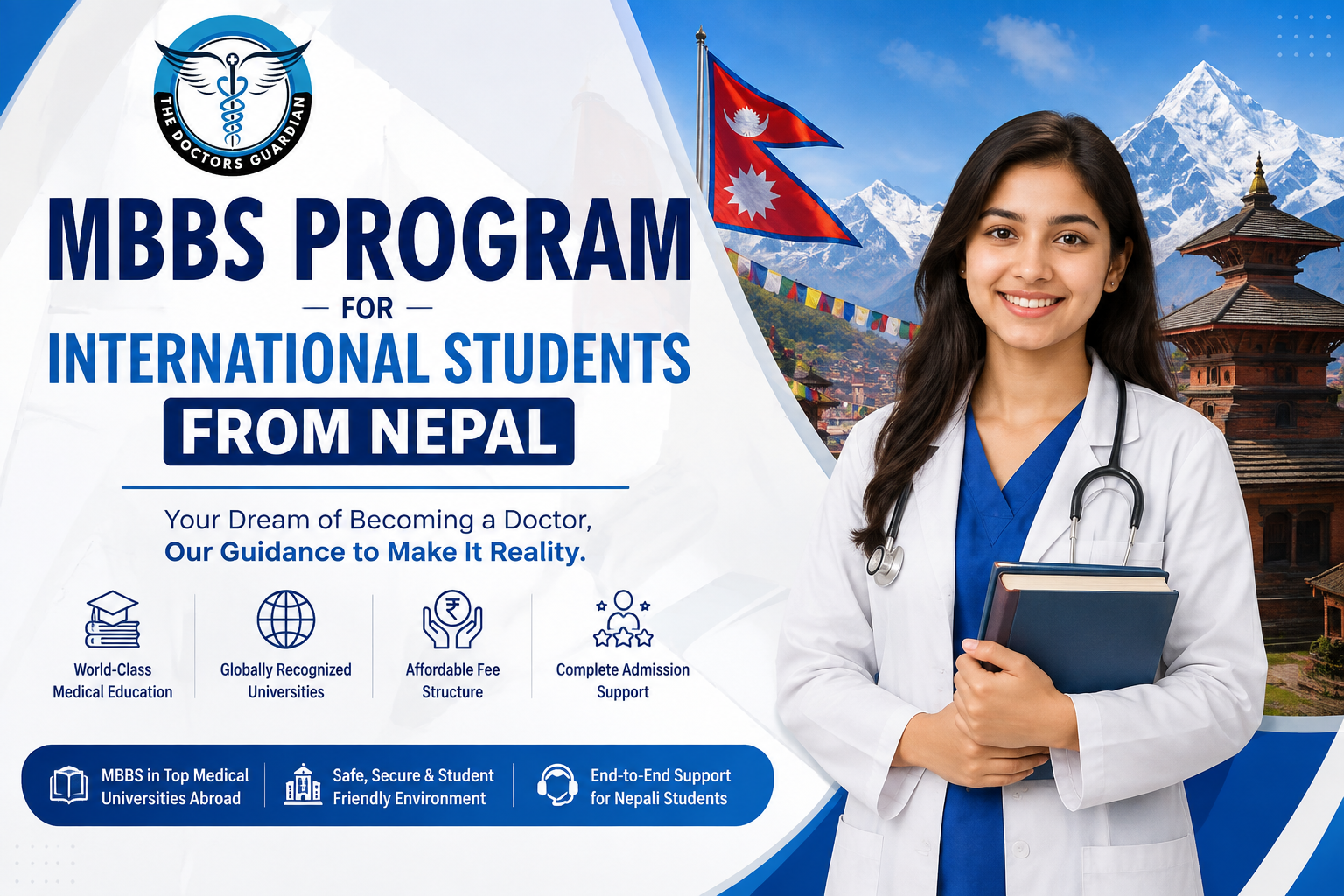
In Nepal, students do not need to spend the entire day in the classroom.The MBBS Program for international students from Nepal includes admission eligibility, fees, and career prospects.
Choosing to study MBBS overseas is a significant choice for students from Nepal seeking top-notch medical training, cutting-edge facilities, hands-on experience, and enhanced career prospects. Medical education is highly competitive these days and many students from Nepal consider to go to the medical universities in other countries to pursue their medical studies that have an established reputation and are available at more reasonable fees.
university for international students from Nepal, including eligibility for the NEET examination, academic requirements, university recognition, tuition fees, living costs, course duration, clinical training, licensing requirements, and career prospects.
Get Free Admission Guidance — Talk to an Expert Today
- Expert Guidance for Admission
- Step-by-step Counselling Support
Here, we will discuss about the important aspects of MBBS course for international students from Nepal, such as admission requirements, documents, fees, course duration, popular destinations and the entire admission process.
MBBS Abroad for Nepalese Students
The MBBS degree obtained overseas can be beneficial for the students of Nepal to learn medicine in a country There are a number of places that have medical programs taught to international students, or with a significant English medium component.
Generally, students from Nepal should compare the medical university and the qualification to the requirements that would apply to their practice after graduation. If a student wants to continue his/her medical education abroad, or wants to go back to Nepal, the rules of recognition and licensing vary.
Get Free Admission Guidance — Talk to an Expert Today
- Expert Guidance for Admission
- Step-by-step Counselling Support
This decision should not be made solely based on the tuition fees of the university, but also on recognition, curriculum, clinical exposure, internship structure, hospital facilities and the pathway of license.
Why Nepalese Students Choose MBBS Abroad
Students from Nepal think about studying abroad for medical studies for a number of reasons.
This will offer more options for medical universities.
Get Free Admission Guidance — Talk to an Expert Today
- Expert Guidance for Admission
- Step-by-step Counselling Support
International students have various options available from medical universities in India, Bangladesh, Russia, Philippines, Kazakhstan, Kyrgyzstan, Uzbekistan and many other countries.
Affordable Medical Education
The tuition fee and accommodation cost of MBBS in some foreign countries is less expensive than in some of the private universities.
Students should however work out the total cost of education which covers tuition, accommodation, food, travel, insurance, examination costs and other University expenses.
International Exposure
Students study abroad and have the opportunity to meet students from other countries and to learn about other healthcare systems. This can assist in the growth of communication skills, cultural awareness and professional adaptability.
Clinical Experience
Medical education goes beyond the classroom. Practical training, lab work, hospital exposure and clinical rotations under supervision are all crucial components of an MBBS course.
Students need to take care to verify the affiliated teaching hospitals and clinical training possibilities before joining a university.
Eligibility for MBBS Abroad for Nepalese Students
Requirements may vary from country to country and university to university. In most cases, students seeking admission to an MBBS course will have passed their higher secondary school exam with science and the necessary subjects.
A typical university entry requirement is:
- Must have completed class 12 standard or equivalent.
- Physics, Chemistry, and Biology – compulsory subjects.
- Meeting the minimum academic percentage as prescribed by the university or the regulatory body.
- Compliance with age requirement for course.
- Passing any entrance exam or national entrance requirement relevant to the student’s situation.
- Assessing English-language proficiency (ELP) requirements (where applicable).
It is the student’s responsibility to check the current requirements prior to submission as admission policies may vary from year to year.
Does Nepalese students need to take NEET exam?
The NEET qualification is necessary based on the destination, applicable rules and future plans of the student.
NEET UG is an important examination for the students of Nepal who are planning to go for medical education in India as the admission to medical college in India follows medical admission rules of India.
Other countries may have other requirements for students who are interested in studying abroad. Some universities might perform their very own admission evaluation, whereas others might admit students based on their academic qualifications and qualification.
Students must thus double check the rules of the country that they are going to and also the rules applicable in Nepal before selecting the university.
The following documents are required for MBBS Admission:
It is typical to get academic and identification papers from international students at the time of admission.
Common documents may include:
- Passport
- Passport-size photographs
- Class 10 Certificate and Marksheet
- Awards and marksheet for Class 12.
- Birth certificate
- NEET scorecard (if applicable)
- If applicable, a copy of a migration certificate.
- Medical fitness certificate
- Character certificate
- Bank or financial documents (where applicable)
- Proof of nationality
- Other documents as specified by the University.
Specific requirements for the documents may differ from country to country and university to university.
MBBS Course Duration for International Students in India is 5.5 years.The duration of MBBS Course for International Students in India is 5.5 years.
The time period of an MBBS course may differ from nation to nation and college to college.
In most countries, medical students are required to undertake a number of years of academic training before clinical training or internship. In other countries, the program is different, so students need to check out the full curriculum before enrolling.
Students cannot just examine the number of years when selecting universities. They should also visit:
- Pre-clinical education
- Para-clinical education
- Clinical subjects
- Hospital rotations
- Internship requirements
- Practical training
The following information applies to students finishing their studies in the 2018-19 academic year.This information is updated for students graduating in 2018-19.
MBBS Fees for Nepalese Students
The cost of studying abroad for MBBS is different from one place to another depending on the country, university, student’s lifestyle and accommodation.
The main costs will typically be:
| Expense | What It Covers |
|---|---|
| Academic Charges (University) | Tuition Fees |
| Hostel Fees | Student accommodation |
| Food | Meals and daily food expenses |
| Visa Expenses | Student visa and related charges |
| Insurance | Health or student insurance |
| Travel | Flights and local transportation |
| Books & Supplies | Academic materials & equipment |
| Examination Charges | Refers to the cost of the University or examination-related charges. |
| Other Expenses: Personal & Administrative Expenses: |
Students are advised to inquire with the university or the admission consultant for a full fee schedule in addition to the advertised tuition fee.
Popular MBBS Destinations for Nepalese Students
There are a number of countries for medical education in Nepal. The choice of destination is a combination of academic qualification, costs, recognition, language, climate, clinical exposure and future plans.
MBBS in India
India is one of the most familiar and near destinations for the students of Nepal. Geographical proximity, cultural similarities and relatively easy travel between Nepal and India may be advantageous to students.
International students however, must adhere to the relevant admission and eligibility requirements and medical admission in India is extremely competitive.
MBBS in Bangladesh
Another place that students from Nepal consider is Bangladesh. The geographical proximity and commonalities of food and culture can make the transition easier for some students.
Students should make sure they are aware of the university’s recognition and admission processes, tuition fees, and clinical training facilities.
MBBS in Russia
There are a few medical universities in Russia offering medical programs to foreign students. Some schools offer English courses and have experience teaching students from other nations.
Students must confirm the recognition of the Russian university before enrolling in it, and that the programme meets the requirements that are pertinent to their future licensing plans.
MBBS in the Philippines
The medical education setting in the Philippines is known for its English language usage. But the organization of medical education might vary from the conventional MBBS route, as in other nations.
It is important for Nepalese students to be aware of the entire admission process, academic criteria, length of study and licensing process of the Philippines before making their choice.
MBBS in Kazakhstan
Kazakhstan has become an option for international medical students because of the availability of medical universities offering programs to foreign students.
A student should consider comparing the various universities based on the recognition of the university, teaching hospitals, clinical exposure, tuition fee, accommodation and suitability of the degree for their career path.
MBBS in Kyrgyzstan
International students who are seeking comparatively cheap medical education also consider Kyrgyzstan as their choice.
Students should not just choose a university because of their low fees. The primary considerations should still be recognition, curriculum, clinical facilities, academic standards and future licensing eligibility.
MBBS in Uzbekistan
In recent years, the universities in Uzbekistan have drawn in foreign students. There are several institutions that provide foreign students with medical education.
Prior to admission, students are advised to check the current status of the university, its international recognition, admission criteria, and its clinical training programs.
How to Choose the Best MBBS University Abroad
Selecting the appropriate university is more significant than just selecting the cheapest.
Nepalese students have to consider the following factors:
1. Recognition
Students should always check if the medical university is recognized by the appropriate national and international bodies and if the qualification obtained from the medical university is suitable for pursuing their chosen pathway to a license.
2. Clinical Exposure
Ensure the number and quality of affiliated hospitals and the amount of practical clinical training provided to students.
3. Medium of Instruction
Verify that the program is delivered in English and that students have adequate facilitation of clinical communication.
4. Total Fees
Consider the total cost rather than tuition only.
5. Hostel Facilities
For international students, they would want to inquire about on-campus housing, food, security, heating/cooling systems, and other services.
6. Location
The location of the university may impact on travel expenses, living costs, climate, transportation and overall student experience.
7. Student Support
Having a specific department for international students at the universities makes it easier to get admission, visa and accommodation and interact with the academic staff.
8. Future Licensing
One of the most crucial factors is this. The students should have a knowledge of the licensing and registration procedure in Nepal or any other country where they want to practice medicine.
Admission Process for MBBS Abroad
Typically, there are multiple steps in the admissions process.
Step 1: Check Eligibility
Check what the university requires in terms of academic, age, exam and language requirements.
Step 2: Choose the University
Choose the university to which you wish to transfer.Pick your university of transfer.
Analyse the key features of recognised universities including the fees, course content, clinical exposure, location, accommodation and licensing requirements.
Step 3: Prepare Documents
Gather academic certificates, passport, photos, eligibility papers and other necessary documents.
Step 4: Submit the Application
Once you have entered all your details, submit the Application.
Fill in the university application form and submit the necessary documents.
Step 5: Receive the Admission Letter
When the school informs you that you’ve been accepted, you will receive an Admission Letter.
Students who are eligible to admission or offer letter can be issued by the university.
Step 6: Complete Visa Formalities
Once the necessary University paperwork is obtained, students are able to move forward with the appropriate student visa application.
Step 7: Travel and Start the Program
Have you relocated?Have you moved and become a part of the University?
After the visa and travel is arranged, the student may then travel to the country of destination and start the academic program.
Students from Nepal are interested in studying MBBS abroad from Nepal.Nepalese students are interested in doing their MBBS in abroad from Nepal.
need written information before paying an admission fee on:
- University recognition
- Total tuition fee
- Hostel fee
- Food charges
- Course duration
- Internship structure
- Clinical training
- Medium of instruction
- Examination system
- Refund policy
- Visa requirements
- Licensing requirements in Nepal
- Additional university charges
- Accommodation arrangements
Students should also be wary of admission promises to obtain a medical license, a guaranteed job or a guaranteed admission to postgraduate studies.
Career Opportunities After MBBS Abroad
Post completion of an MBBS course abroad, different career paths can be pursued depending on the student’s eligibility of degree recognition and licensing.
A graduate can consider:
- An individual’s medical practice following the completion of the necessary registration procedure.The practice of medicine by an individual once the individual is registered.
- Postgraduate medical education
- Medical research
- Public health
- Healthcare administration
- Clinical research
- Medical education
- Opportunities in other countries as per their licensing requirements
Before choosing the university, it is important to understand the process of returning to their home country, Nepal, and practicing medicine as a student.
Benefits of Planning Early
Early Admission allows students more time to:
- Compare universities
- Verify recognition
- Arrange finances
- Prepare documents
- Complete entrance requirements
- Apply for admission
- Complete visa formalities
- Plan for housing and transportation
Early planning also helps minimise the likelihood of making a choice of university without due care and attention to academic and regulatory credentials.
These are the common mistakes that students should avoid in their Nepalese writing.
Pupils and parents should not decide based on the advertising or promises.
Some common mistakes include:
Choosing Only on the Basis of Low Fees
It’s not just about the low tuition fee, the university is not always the best choice.
Not Checking Recognition
Financial commitment should be made after verification of recognition.
Ignoring Clinical Training
Medical degree calls for thorough practical and clinical training.
There is a misunderstanding regarding the licensing process.There is a lack of understanding of the licensing process.
It is important that students have some ideas regarding what they will need to do after they complete their studies if they plan to work in Nepal.
Paying without reviewing the fee structure.Excessively paying without considering fee structure.
Make sure you get a breakdown of tuition, hostel, examination, administrative and other fees.
Over trusting unverified claims is incorrect.It is wrong to trust unverified claims.
Where possible, information on admission should be verified from official sources of the University and the regulations.
MBBS Abroad for Nepalese Students: Final Thoughts
For those aspiring to study medicine outside Nepal, the MBBS program for international students from Nepal could be a beneficial option. But, selecting the best university is not all about tuition fees.
Before choosing, students are urged to carefully look at the following aspects of the course: recognition; academic quality; clinical exposure; course structure; total expenses; accommodation; admission requirements; future licensing options.
The medical college the student is aiming for should be suitable to his academic profile, his financial plan and his future plans. Therefore, parents and students are advised to do the necessary research and check all the information about admissions and regulations before making any payments.
Frequently Asked Questions
1. Is studying MBBS in Nepal possible outside of Nepal?
Yes, it is possible for the Nepalese students to get admission in medical universities of various countries if they fulfill all the required eligibility, admission, visa and regulatory requirements for international students.
2. Should the students of Nepal be required to do NEET?
The requirements for NEETs varies depending on the country and the path of admission. The students who intend to do medical graduation in India should follow the relevant NEET UG rules and medical admission regulations.
3. Best countries to pursue MBBS after Nepal?
International medical students look at other countries like India, Bangladesh, Russia, the Philippines, Kazakhstan, Kyrgyzstan and Uzbekistan. The decision lies in the recognition, fees, clinical exposure, eligibility, and licensing plans.
4. What is the price of MBBS abroad for the student of Nepal?
The tuition fees are different depending on the country and the university. When determining the total budget, students should take into account other costs, such as examination fees, insurance, visa requirements, traveling, residence, and tuition.
5. What is the duration of MBBS abroad program?
Time is dependent on country and university. Students should look at the entire program with all of its academic study, clinical training and internship requirements.
6. Are there possibilities for Nepalese students to return to Nepal after studying MBBS in foreign countries?
Students are allowed to return to Nepal but have to meet the required conditions for medical registration and practice in Nepal. These are the things that should be verified prior to selecting a university.
7. What documents are needed for MBBS admission in overseas?
Academic certificates, marksheets, passport, photographs, birth certificate, medical fitness certificate and other documents required by the university and immigration authorities are common documents.
8. Do they offer English medium MBBS in foreign countries?
Yes, there are some foreign medical universities that provide English medium education. It is important, however, for students to find out the actual medium of instruction and language requirements for clinical training.
9. What are the factors that should be considered by the students while choosing a MBBS University abroad in Nepal?
Students must make comparisons with respect to recognition, curriculum, clinical exposure, teaching hospitals, tuition, cost of living, accommodation, location, student support, and licensing requirements.
10. Is MBBS abroad a good career for Nepalese students?
Students who are eligible and choose a reputed medical university wisely, may consider studying MBBS abroad. The choice must be made on a long-term career goal and not necessarily the tuition cost alone.